
Roof Moss Treatment That Keeps Moss From Coming Back
Cleaning a roof removes the moss you can see. Roof moss treatment is what keeps it from growing right back. Rainier Roof Restoration applies moss treatment after cleaning for homes across Tacoma and Puget Sound, then helps you set a schedule that fits how much shade and rain your roof gets.
We’ve been cleaning, treating and repairing Western Washington roofs since 1987, from our shop in Fircrest. In our climate, a roof that gets cleaned and never treated usually turns green again within a few seasons. A treatment slows that cycle down, so you clean less often and the roof stays dry longer. Think of it as roof moss prevention: a little work every year or two instead of a big cleanup after the moss has taken over.
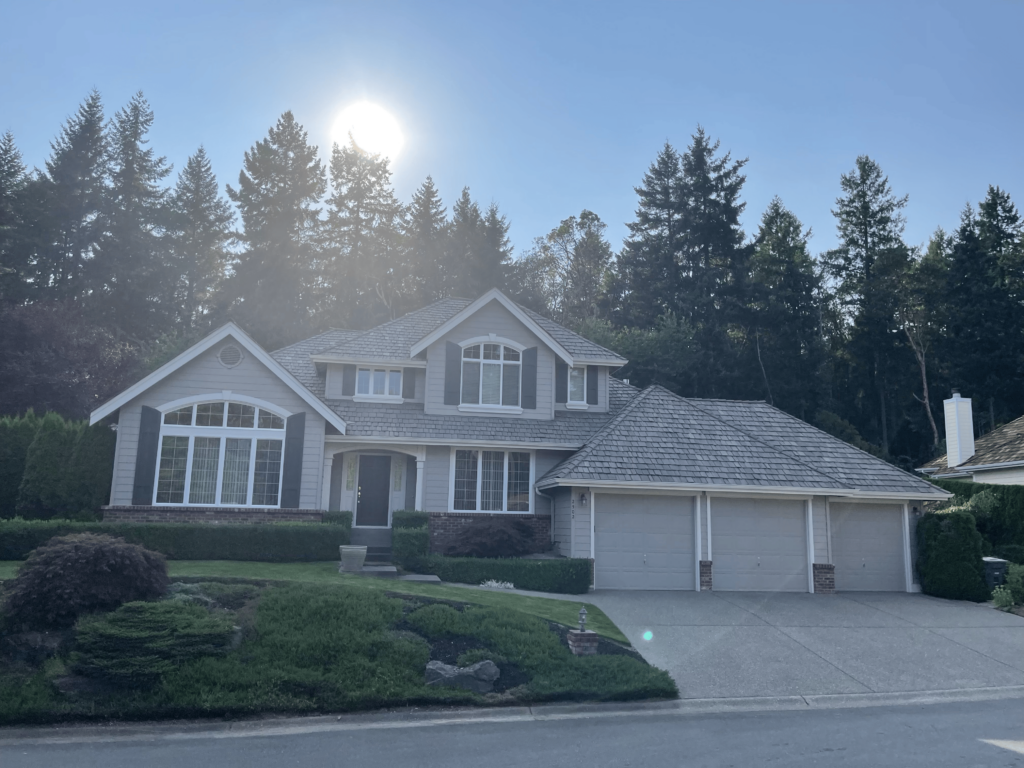
What Our Roof Moss Treatment Includes
Every roof is different, so we start by looking at the roof, the trees around it and how much growth has come back since the last cleaning. Most treatment visits include some mix of the services below.
Treatment After Cleaning
Treatment works best on a clean surface. If moss has built up, we clear it first with our roof moss removal service, then apply the treatment so it reaches the roof itself.
A Schedule Set by Shade
Roofs under tall firs need attention more often than open, sunny roofs. We recommend a treatment schedule based on what we see on your roof, not a one-size calendar.
Cedar Roof Treatment
Cedar shakes hold moisture longer than other roofing. Treating a cedar roof after cleaning helps the wood shed water and slows the growth that leads to splitting and rot.
Tile and Composition Roofs
Moss settles in the gaps between tiles and on the granules of composition shingles. Treatment slows it on both, so it can’t lift edges or wear down the surface as quickly.
Valley and Gutter Checks
Needles and debris collect in roof valleys and gutters, where they hold water and feed new moss. We check these spots on each visit and clear what we find on the roof.
Small Problems Caught Early
A treatment visit puts eyes on your roof on a regular basis. If we see a cracked shingle, a split shake or loose flashing, we’ll show you before it turns into a leak.
Get a free roof moss treatment estimate. Call (253) 565-5200 or send us a message, and we’ll look at your roof and recommend a schedule.
Serving Tacoma, Fircrest, University Place, Lakewood, Gig Harbor, Puyallup and the rest of Puget Sound.
Why Roof Moss Treatment Works Best on a Clean Roof
Oregon State University Extension advises cleaning a roof before treating it, and that matches what we see on the job. When moss is thick, a treatment sits on top of the growth instead of reaching the roof. Removing the moss first lets the roof moss treatment do its job where it matters, on the shingles, shakes or tiles underneath.
Here’s how a typical visit goes:
- We look at the roof and the trees around it, and give you a free estimate before any work starts.
- If moss has built up, we clean the roof first with soft wash and low-pressure methods.
- Our crew, working on ropes and harnesses, applies the moss treatment across the roof, paying extra attention to the shaded side and the valleys.
- We clean up the moss and debris that come off the roof.
- We recommend when your roof should be treated again, based on its shade and how quickly moss came back.
Moss treatment is not a replacement for cleaning a roof that is already covered. It’s the step that protects a clean roof. Homeowners who pair a cleaning with regular treatment usually avoid the heavy buildup that leads to lifted shingles, clogged gutters and early repairs.

Roof Maintenance Plans for Shaded, Wet Puget Sound Roofs
Long, wet winters and tall evergreens make roof maintenance more important here than in most of the country. Oregon State University Extension notes that moss traps soil and debris that hold moisture against the roof, which keeps wood wet longer and shortens a roof’s life. Steady upkeep is what keeps that from starting.
A roof maintenance plan with Rainier Roof Restoration is a schedule built around your roof. After your first cleaning and treatment, we recommend how often to come back, based on shade, tree cover and how fast growth returned. Roofs under tall firs can need attention every year or two. Open, sunny roofs can go longer.
On a maintenance visit, we check the roof surface, clear the needles and debris we can reach in the valleys, re-treat the shaded areas where growth comes back first, and look over vents, flashing and ridge lines. You get a short rundown of what we found and whether anything needs repair now or can wait until the next visit.
Signs your roof is due for maintenance:
- Green patches coming back on the shaded, north-facing side
- Needles and debris piling up in valleys or around chimneys
- Moss collecting in gutters or at the bottom of downspouts
- Dark streaks spreading across the surface again
- Branches touching or hanging over the roof
- It has been a few years since the last cleaning or treatment
Trees play a big part in any roof maintenance schedule. OSU Extension points to shade as a main driver of moss growth and suggests trimming trees so more sun reaches the roof. If branches shade or touch your roof, trimming them is one of the simplest ways to slow moss down between treatments.


Why Homeowners Choose Rainier Roof Restoration
Homeowners rate Rainier Roof Restoration 4.8 out of 5 stars from 185 Google reviews. Many of them have been calling us back for cleaning and treatment for years, and they mention the results on cedar roofs and how we leave the property.
- A free estimate before any work starts
- A licensed, bonded and insured Washington contractor, license #RAINIRR916CO
- Soft wash and low-pressure cleaning before treatment, done by a crew on ropes and harnesses
- A treatment schedule based on your roof, not a fixed calendar
- Straight answers about what your roof needs now and what can wait
- Cleaning, treating and repairing Western Washington roofs since 1987
Roof Moss Treatment Questions
What is the difference between roof cleaning and moss treatment?
Cleaning removes the moss, algae and debris that are on your roof now. Treatment is applied after cleaning to slow new growth from coming back. Most roofs in our area need both: a cleaning to reset the roof, then treatment on a schedule to keep it clean longer.
How often should a roof be treated for moss?
It depends on how much shade and tree cover your roof gets. Roofs under tall trees can need attention every year or two, while open, sunny roofs can go longer. After your first cleaning, we’ll recommend a treatment schedule based on what we see on your roof.
Does moss treatment work on heavy moss?
Treatment works best on a clean roof. When moss is thick, the treatment sits on top of the growth instead of reaching the roof underneath. That’s why we remove heavy moss first with soft wash and low-pressure cleaning, then apply the treatment to the clean surface.
Is roof moss treatment worth it on a sunny roof?
Sunny roofs grow moss more slowly, but most Puget Sound roofs still get enough rain and shade to grow some. A treatment can stretch the time between cleanings. During your free estimate, we’ll tell you honestly whether your roof needs regular treatment or can wait.
Can moss treatment be used on cedar shake roofs?
Yes. Cedar shakes hold moisture longer than composition shingles, so they benefit from treatment after cleaning. We clean cedar gently to protect the wood, then treat it to help it shed water and slow the growth that leads to splitting, cupping and rot.
When is the best time of year for roof moss treatment?
We treat roofs most of the year. Many homeowners schedule cleaning and treatment in the drier months so the treatment has time to work before the heavy rains, but a roof with moss coming back is worth treating whenever you notice it. Call and we’ll find a time that fits.
Roof Moss Treatment Across Tacoma and Puget Sound
Our shop is at 447 Farallone Ave in Fircrest, and most of our treatment work is in Tacoma, Fircrest, University Place, Lakewood, Gig Harbor and Puyallup. We also treat roofs in Seattle and on the Eastside. Find your city on our areas we serve page, or call and we’ll tell you right away if we cover your neighborhood.
If your roof hasn’t been cleaned in a while, start with our roof moss removal service. If we find damage while we’re on the roof, our roof repair crew can take care of it.
Get a Free Roof Moss Treatment Estimate
The best time to treat a roof is before moss takes hold again. Call Rainier Roof Restoration at (253) 565-5200 or send us a message, and we’ll look at your roof, give you a free estimate for roof moss treatment, and recommend a maintenance schedule that fits your home.